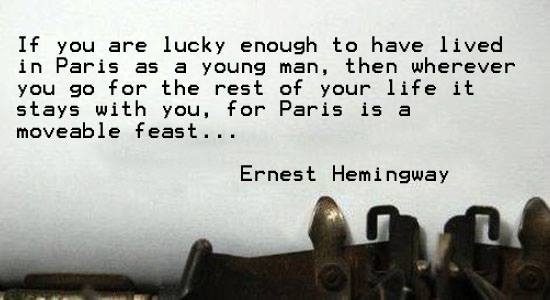
We all feel ‘stuck’ sometimes with our writing and the most common problem I hear as an English tutor in Bolton is: ‘I don’t know where to start.” Hemingway’s emphatic advice is beautifully clear and gives honesty a prominent position in the creative process: All you have to do is write one true sentence. Write the truest sentence that you know.” Ironically this contrasts with Henry James who found the exhortation to tell his friend Minnie Templar ‘something that you are sure is true…’ impossible to fulfill. For a writer capable of writing thousands of words, James’s reaction and ‘haunting’ seem both fascinating and more than a little revealing.
…Henry thought now maybe meant more to him than any others, including all the words he had written himself, or anyone else had written. Her words haunted him so that saying them now, whispering them in the silence of the night, brought her exacting presence close to him. These words constituted one sentence. Minny had written: ‘You must tell me something that you are sure is true.‘ That, he thought, was what she wanted when she was alive and happy, as much as when she was dying, but it was her illness, her knowledge that time was short, that made her desperate to formulate her great and generous request.’You must tell me something that you are sure is true.‘ The words came to him in her sweet voice, and as he sat on his terrace in the darkness he wondered how he would have answered her if she had written the sentence to him. ( The Master, ColmToibin, p.110)
Sometimes when I was starting a new story and I could not get it going, I would sit in front of the fire and squeeze the peel of the little oranges into the edge of the flame and watch the sputter of blue that they made. I would stand and look out over the roofs of Paris and think, “Do not worry. You have always written before and you will write now. All you have to do is write one true sentence. Write the truest sentence that you know.” So finally I would write one true sentence, and then go on from there. It was easy then because there was always one true sentence that I knew or had seen or had heard someone say. If I started to write elaborately, or like someone introducing or presenting something, I found that I could cut that scrollwork or ornament out and throw it away and start with the first true simple declarative sentence I had written.(Ernest Hemingway, A Moveable Feast).