Stave one.
In a nutshell.
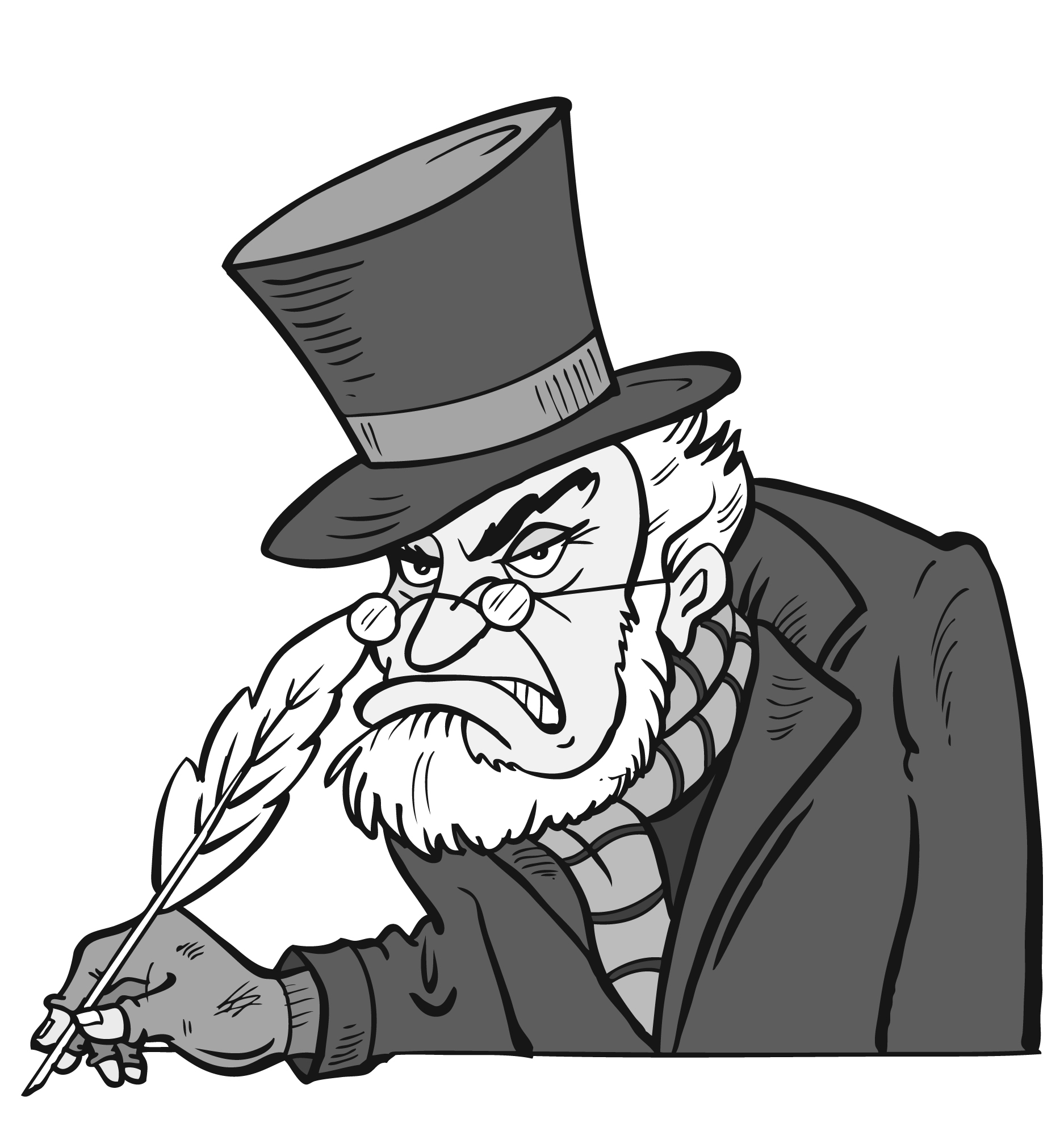
Scrooge’s miserly character is established. He refuses to share any Christmas greetings or preparations. He behaves callously to his impoverished clerk, Bob Cratchit as well as to the Charity Collectors and utters his infamous dismissal of the poor being only ‘surplus population.’ His nephew Fred probably enjoys the best of Scrooge’s conversation as Fred is a very good-tempered young man. Marley’s Ghost appears twice, warning his former partner of the impending visits of the three Ghosts. Significantly Marley(Scrooge’s old business partner) first appears as the door knocker acting as an emissary, foreshadowing the supernatural visitations who will later cross Scrooge’s threshold and destabilise his entrenched views.
Summary with Quotations.
The opening line of the stave creates the expectation of resurrection linked to ghostliness. Certitude is unravelled in the terse first line! ‘Marley was dead: to begin with.’ Dickens loves paradox and this opening line is playfully grotesque. It opens with what other writers and readers might believe is the ending. It’s Christmas Eve. Ostensibly a time of good cheer and festivity, yet Scrooge is ‘busy in his counting-house.’ Business is Scrooge’s obsession. His dis-ease. Scrooge ’s miserliness reinforced by setting and lack of spirituality. The irony of the word, ‘busy’. Incongruous on Christmas Eve. Financial gain is Scrooge’s God: Money is Deified by Scrooge. Icy, ‘cold’ setting establishes Scrooge’s spiritual aridity. He is a ‘dead’ character at the beginning of the story. Hyperbolic language revels in the meanness of the protagonist, almost as if Scrooge describing his own circumstances with pride, ‘celebrating’ his anti-social ‘otherness.’ The irony that the narrator’s wry humour, gives a strange vitality to Scrooge’s deadly outlook.
The incongruity of Scrooge in a festive world. Bob Cratchit forced to work in the cold. Bathos of the coal distribution. Scrooge without compassion, even to himself. Self-alienated man. Says ‘humbug’ to the warm, Christmas greetings of his nephew. The concept of ‘charity’ discussed. Scrooge abrupt and rude to eloquent nephew. Defensive about love perhaps? But more civil to Fred than any other human being, perhaps because he is his dead sister’s son?
Foggy throughout. Pathetic fallacy reveals moral blindness and corruption of Scrooge. Sinister atmosphere alleviated by the defiant Christmas cheer of the revellers. Dickens’ city is a deprived, poverty-stricken place.
Charity collectors call on Scrooge. He dismisses them.‘ Are there no prisons…workhouses?’ Grotesque, heartless humour. Echoes ideas propounded by Malthus. Scrooge refuses to imagine the suffering of others. Lacks empathy or compassion. He has buried himself alive in greed. If Marley his former partner( died 7 years before on Xmas eve) is dead, then so is Scrooge. He objectifies the poor as ‘surplus population.’ This prevents any need for his thoughts to dwell on the suffering of others. We have to witness his spiritual aridity and cruelty for his rebirth/resurrection to be a miracle. We have to respect Dickens’ knowledge that it would take 4 ghosts to change Scrooge!
Scrooge goes home to decrepit, ‘lowering’ lodgings which had previously belonged to Jacob Marley. Maybe Scrooge cannot separate himself from his past with Marley? His psychological, spiritually ‘lost’ character reflected in the fallen space. An extended metaphor for Scrooge and his types? Personification gives dark comedy to the horror that is Scrooge’s life.
Marley’s face appears on the door knocker. Animation makes for an apprehensive Scrooge. Humour attempt at the dilution of fear. Scrooge is not a coward. Strange that his heartlessness does not extend to cowardice. Perhaps gives an inkling of the courage of Scrooge when reencountering his past mistakes as well as accepting his own culpability in his downfall. Creates a compelling character. His characterisation is complex even when he is behaving atrociously.
Then we witness the grotesque reappearance of Marley trailing a chain weighed down with cashboxes and heavy purses. The accoutrements of Marley’s previous life are now ironically trailing and shackling him in death. Warns Scrooge that he will be visited by three spirits. Announces their timing. And that Scrooge has a chance of escaping Marley’s purgatory if he changes his nature.
An awful glimpse into Marley’s destiny: he can witness pain, but he is powerless to intervene. Condemned by his previous behaviour to suffer forever. Interesting that when we see the Final Ghost, the horror of Marley’s fate seems further amplified by the abject loneliness of Scrooge’s potential future, dying alone, nearly literally devoured by animals, metaphorically by human thieves/parasites and opportunists.