Macbeth Act One Scene Seven.
I would highly recommend the BBC series Shakespeare Unlocked on YouTube as the workshop on this scene was a revelation. Really insightful and inspiring.
This scene ends Act One with Macbeth initially rejecting the idea of killing Duncan, but then returning to his murderous decision after the incisive intervention of Lady Macbeth. The scene ends with a vivid description of the murderous plan.
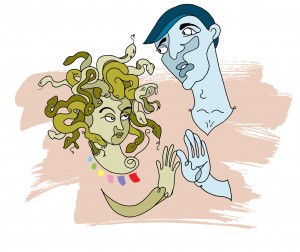
Here are a few questions and insights about this scene:
1) Why does Macbeth quit the company of Duncan to retreat to this room in the castle? Is Macbeth’s withdrawal from the celebratory feast a sign of his awkwardness before the doomed monarch? If Macbeth does feel uneasy or even ashamed to be performing the loyal host in front of Duncan, does this deepen Macbeth’s character and show he is stricken by scruples and a guilty conscience? How does such a sense of awkwardness compare to Lady Macbeth’s facade of civility? Does hypocrisy seem easier for Lady Macbeth?
2) The dilemma about killing Duncan expressed at the beginning of the scene reminds me of Hamlet’s famous ‘to be or not to be speech’, where Hamlet considers suicide in the face of his abject situation involving his murdered father. Interestingly the dilemma of Macbeth could also be said to link to a murdered father figure(Duncan) as well as involve a form of suicide: for if Macbeth kills the King( a surrogate father figure) he is destroying his noble self and consigning his soul to damnation. A form of suicide?
3) Look at the way Macbeth initially avoids speaking directly of his intention to murder Duncan. He shrouds his intention in apparent anonymity through the use of the pronoun, ‘it’ which acts as a mask or veil. He also deploys the political sounding noun, ‘assassination’ which may endow his sordid and murderous desires, with legitimacy and justification. Is he hiding the truth even from himself? Is the truth too much to admit?
4) Macbeth is acutely aware that his proposed murder will affect his own life afterwards. However, if the death of Duncan was the ‘be-all and the end-all here’ then he thinks he would go ahead and reign well as a good king before accepting the damnation of the ‘life to come.’ That said he recognises that such a hope is highly unlikely to be realised as murder would bring about bloody consequences to ‘plague the inventor’ and which would become a ‘ poison’d chalice’ for his reign. This choice of image brilliantly evokes the contamination and nihilism of Macbeth s ‘vaulting ambition.’.
5) King Duncan is a virtuous monarch and Macbeth gives three powerful reasons why he should not kill his King. Duncan is his relative, he has promoted and honoured his subject Macbeth and he is a ‘meek’ and virtuous ruler. His murder Macbeth believes will agitate the angelic realm in the heavens who will be utterly horrified by such evil. And Macbeth s resigned acknowledgement at the end of this soliloquy is that his only reason for killing Duncan is greedy ‘vaulting ambition.’ It is palpably not enough.

6) Lady Macbeth’s fiery questions when she tracks down her husband to this retreat shows her understanding of his reasons for quitting the chamber. Their mutual understanding is palpable and the use of the interrogatives add intensity to the exchange. Lady Macbeth believes her husband is about to destroy their dream. She feels betrayed, thwarted and desperately disappointed.
7) When Macbeth tells his agitated wife, ‘We shall proceed no further in this business’ the pronoun ‘we’ carries an ironic weight. The husband who has referred to his wife as his ‘dearest partner of greatness’ is now speaking on her behalf and silencing their ambitions. It feels almost as if Macbeth is returning their marriage to a more conventional status. It may also be a deliberate attempt to antagonize his wife either into obedience or the opposite. Perhaps it may even be both. Interestingly Macbeth refers to his popularity and respect within the community as a reason for changing his mind. After he does murder Duncan, all the respect for him evaporates and this has catastrophic effects on their futures. Macbeth was tragically right about the effects of his wrong!
8) Lady Macbeth receives this news badly! In fact, she retaliates with aggression and irony designed to undermine her husband’s vulnerability. She suggests he is too feminine and cowardly to carry out his promise to her. The jibes about his manliness seem both in terms of his courage as well as sexual- potency. (Remember they are childless). This goading causes a strong reaction from her husband. ‘ I dare do all that may become a man.’ Interestingly Macbeth fails to recognise that Lady Macbeth’s understanding of manliness involves violence and murderous. Humanity is disturbingly absent from her translation. Remember it is only when Macduff says he must feel his grief ‘as a man’ that humanity is returned to this fallen world.

9) The cruelty of his wife’s derision continues as she spits out insults that he is more a ‘beast‘ than a man. In the BBC masterclass, these insults cause Macbeth to physically retaliate by slapping her. This physical abuse is shocking and yet convincing and precipitates her vengeful words about the suckling baby, one of the most degrading moments in Shakespeare. The degradation of maternity is shocking. Yet is also an act of revenge against a husband who has failed her and maybe also has physically attacked her. Their intimacy is dangerously spiralling out of control. Is the baby his we wonder, hence the terrible grief she is reminding him of? Or is Macbeth is not the father is the dead baby a cruel reminder of her childless marriage to Macbeth where her hunger for a baby has not been assuaged and now seems horribly corrupted? This enactment of the speech is very powerful as it revealed that the awful declaration might originate in destructively unresolved grief.
10) This outburst changes Macbeth’s mind. He returns to his wife with the tentative yet awestruck question ‘If we should fail?’ And it seems as if Macbeth becomes his wife’s ‘baby’ again. Hence the link between their terrible intimacy and murderous consummation.
11) The scene ends with Lady Macbeth s rather simplistic plan to kill the King and place blame on Duncan’s Chamberlains. This plot is unconvincing and exposes the Macbeth couple to suspicion immediately precipitating tension and drama and guaranteeing that Macbeth s reign will be a dismal failure. The couple return to the feast united in their deadly hypocrisy and masquerade of loyalty.