
 Dickens was haunted by his time spent in Warren’s Blacking Factory when he was 12, after his father’s debt consigned his family to the debtors’ prison. The abject misery of the young Dickens, buried alive in a monotonous job without hope of respite, or fulfilling his brilliant potential is given powerful representation in A Christmas Carol as well as many other novels including Copperfield David and Nicholas Nickleby.
A few months before he died, Dickens confided in Forster, who was both his friend and biographer: ‘ it is wonderful to me how I could have been so easily cast away at such an age…’ This sense of rejection and despair finds representation in the characterisation of Scrooge. Note the underlying feeling of rejection and of being emotionally un-anchored, communicated here by the older Dickens. Little wonder that Scrooge should react so powerfully to the Ghost’s revisitation of his early life as this recollection of Dickens confirms his feeling that he was mere rubbish or debris to his unloving father.
So let’s look at A Christmas Carol for evidence of Dickens’ exploration of abandonment.
Remember the novel begins with the striking announcement that: ‘Marley was dead, to begin with.’ The ironic pause after the supposed finality of ‘dead’ conveys a teasing hint that the narrative will explore death’s impermanence, through the experience of being haunted.
But haunted by what and whom?
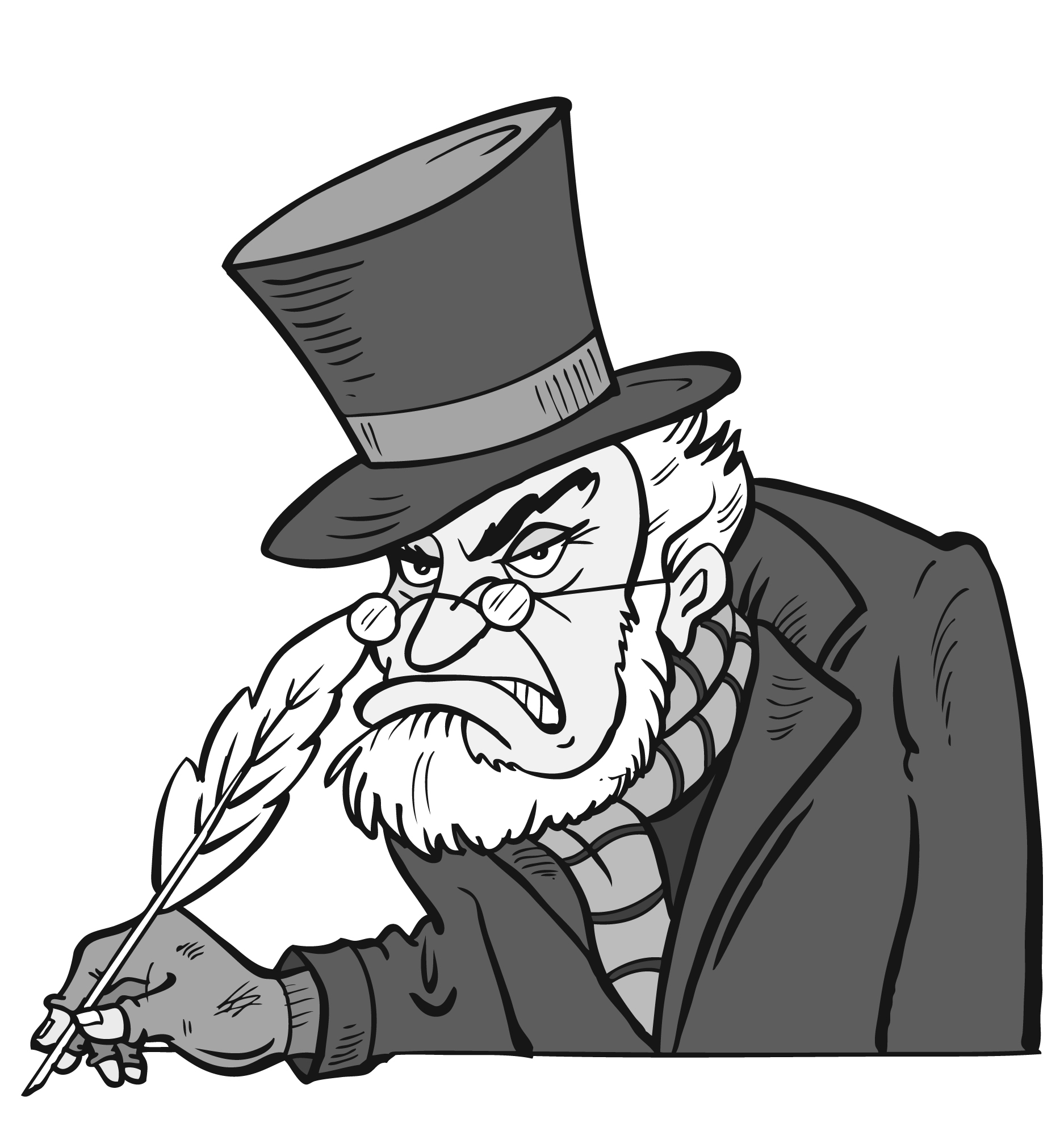
My belief is that the entire narrative of redemption originates from the young Scrooge’s mistreatment by his bullying, absent father, leading to self-protective behaviours that seperate him from his own capacity to feel. For Scrooge has forget how to feel in Stave One.
This is why the four main ghosts haunt Scrooge and steadily encourage him to recognise his spiritual failings and even ‘death’; thus encouraging him to express regret for his missed life and to initiate change.
Interestingly, if we look at the opening stave and specifically reread the fourth paragraph, we notice a reference to Hamlet, who was famously haunted by his dead father at the beginning of the eponymous Shakespearean play, in order for the young Hamlet to seek revenge for his father’s murder at the hands of his uncle. Claudius. Thus this father’s ghost brings unsettling tidings to his vulnerable son and ultimately brings about his son’s death as well as numerous others. Dickens wants the reader to pick up on the themes of both haunting and fathering so he mentions that: ‘Hamlet’s father died before the play began’ creating expectations that are confirmed by Scrooge’s encounters on his journey in the play.
So, in Dickens novella, we witness Scrooge as a childless and isolated ‘oyster’ who seems repelled by the prospect of any intimate relations at all. His rejection of his nephew Fred seems excessively brusque and we wonder why he refuses to spend Christmas with such an open, friendly and witty young relative.
Our questions about Fred are answered when the Ghost of Christmas Past accompanies Scrooge back to his childhood and specifically to his childhood school with all the associations around neglect and abandonment. Hardly surprising then that on the way he remarks of the way: ‘Remember it!… I could walk it blindfold .’ To which the astute Ghost replies: ‘Strange to have forgotten it for so many years.’ Of course, this forgetting is easily understood in terms of repression. Why reflect upon something that is so upsetting for you? Why remember the loss of all your hoped for?
For even before he reaches his old school he thinks: ‘ Out upon merry Christmas. What good had it ever done to him?’ Here we directly enjoy access to Scrooge’s self-justification for abandoning any celebration of Christmas. He sees such celebrations as pointless and emotionally destabilising, as they recall a personally harrowing time for Scrooge as a powerless and vulnerable child: ‘The school is not quite deserted… a solitary child, neglected by his friends, is left there still.’ What a tragic remembrance for Scrooge. He is forced to gaze upon his innocent, younger self and relive his feelings of intense vulnerability and disappointment with his family and friends. And then the Ghost will question him about such suffering.
These feelings are explored even further when he witnesses ( again) his younger sister’s mission to rescue himself( Scrooge) and take him home for one last Christmas before he is sent away from his fraught home to be apprenticed to Fezziwig.
Fascinatingly, we arrive at Fan’s rescue via an intervening recollection of Scrooge’s delight in reading books. His love for the Arabian Knights, therefore, gives vivid expression to his imagination and sensitivity. The liveliness of his recollection underlines his capacity for feeling and therefore his evident ability to be affected deeply by his father’s cruelty to him. And where is the mother? We assume that she is dead, so we can discern a pattern of loss and rejection amassing. Here is Scrooge’s little sister talking about their home life whilst endeavouring to bring her lonely brother home: ‘ father is so much kinder than he used to be.’ This attempt at sisterly reassurance alerts the reader to their father’s previously antagonistic behaviour and the fear he presumably instilled and still instils in the children. The fact a small girl has been sent to collect her brother in place of their father, reveals that the latter’s new kindness is not entirely wholehearted or even convincing and that his attitude to his son is hardly benevolent. When Fan adds: ‘And you’re to be a man! …but first, we’re to be together all Christmas long…’ we recognise the probability that the father is sending Scrooge away to be apprenticed to Fezziwig after his last Christmas with his family. Thus we can also see why Fezziwig’s kindness cannot quite assuage the hurt caused by his parental neglect of Scrooge. Fezziwg is a form of a substitute father for Scrooge and would be a reminder to Scrooge of his parents’ lack of interest in him. I say parents as the mother’s absence we can assume is due to her death and for a child, this can also feel like a rejection too. Maybe the apprenticeship alleviates the burden of school fees for the father and again draws attention to the damage caused to a sensitive and imaginative soul like young Scrooge who would conceive of himself as having little worth and being expendable: hence his life-long need to make himself valuable by financial means?
And even if Scrooge’s ‘heart and soul’ are in the remembered scene of Fezziwig, the ghost has resurrected scenes showing the emotional abandonment of young Scrooge and has even drawn the latter’s attention to Fan’s untimely death as a young mother: ‘She died a woman’
‘ …one child.’ Confirms Scrooge This reminder leads to his ‘nephew’ which makes Scrooge’s defensive behaviour around him far more understandable. Fred painfully reminds Scrooge of his dead sister and this reminder is too painful to tolerate so Scrooge rejects him just as he was rejected by his father.
Belle is yet another character who rejects Scrooge even if her reasoning is that Scrooge has found ‘another idol’ which has ‘displaced’ her in terms of his affections. Obviously, we can infer that this idol is profit, yet we can also see that Scrooge’s emotional damage may have distorted his grieving behaviour to the point where his clinging to the certainty of the material offers the only certainty in his life.
The scene involving Belle parades the fecundity of her marriage. Children are everywhere in this scene and the ‘agitated’ Scrooge feels he can count as he is so disturbed by this revisitation to his past that he even reprimands the psychological ‘torture’ of the ghost.
Surely this powerful word gives clear expression to the depth of his affection for Belle and even its enduring effect? After all, Scrooge has never married, and never chosen a wealthier partner which proves his feelings for Belle were not fleeting. His pain deepens when he spectates on the happiness of Belle’s husband with his wife and daughter by the fireside. Such a tableau of Victorian contentment is intensified by poor Scrooge’s acknowledgement that the daughter might have called him ‘father’ if he had chosen differently.
Then we hear the tale of Scrooge ‘lonely’ in his counting-house awaiting news of his partner, Marley’s death. Such isolation and suffering reveal the emotional effect of Marley’s death and explain the reason the dead Marley might return to try to save Scrooge. Furthermore, we might also infer that the age difference between the two partners might encourage a sort of paternal relationship between Marley and Scrooge. Once again, Hamlet’s ghostly parent is lurking in the shadows of this narrative highlighting the complex and unresolved mourning suffered by Scrooge.
Finally, in the next stage, we reach the Cratchit’s home and Scrooge encounters Tiny Tim who is evidently a crippled child and is also seriously poorly. We suspect he might have rickets( lack of vitamin d) as well as tuberculosis, both conditions caused by poverty and malnutrition.
Scrooge has never imagined what Bob Cratchit’s family might endure due to his lack of compassion and miserliness. Now he is confronted by the reality of the poverty perpetuated by the wealthy refusing to exercise social responsibility and pay a living wage. Each member of the family is individualised making them real to Scrooge and Dickens’ readers, who would have paid 5 shillings for the pleasure of seeing their insensitive behaviour scrutinised by a writer with a powerful social conscience.
Scrooge responds to the vulnerability of Tiny Tim asking the leading question: ‘ tell me if Tiny Tim will live?’ Such a question makes the reader aware of a shift in the closed ‘oyster’ like Scrooge who has retreated into his solitude to avoid the hurt caused by relationships. Yet, look at the ambivalence Scrooge initially feels when he watches Bob Cratchit’s attentiveness to his vulnerable son: ‘Bob held his withered little hand to his as if he loved the child.’ The simile ‘as if’ casts doubts on the authenticity of Cratchit’s appearance of care. Scrooge seems almost unable to accept the hand holding as prof of care because of his own abandonment as a child. But further scrutiny validates Cratchit’s affection for his poorly child and thus paves the way for Scrooge’s transformation.
In fact, it feels as if Scrooge is reawakening and opening his heart and eyes to others again. He is remembering his own capacity to feel. The hurt caused by both Scrooge’s father and Dickens’ own father, , is assuaged through the attention Scrooge lavishes on Tiny Tim, feeding him the ‘prize Turkey’, raising Bob Cratchit’s wages so his family are no longer malnourished, and acting like ‘ a second father’ thereby exorcising Hamlet’s ghost with his own nurturing expression of parental care.
