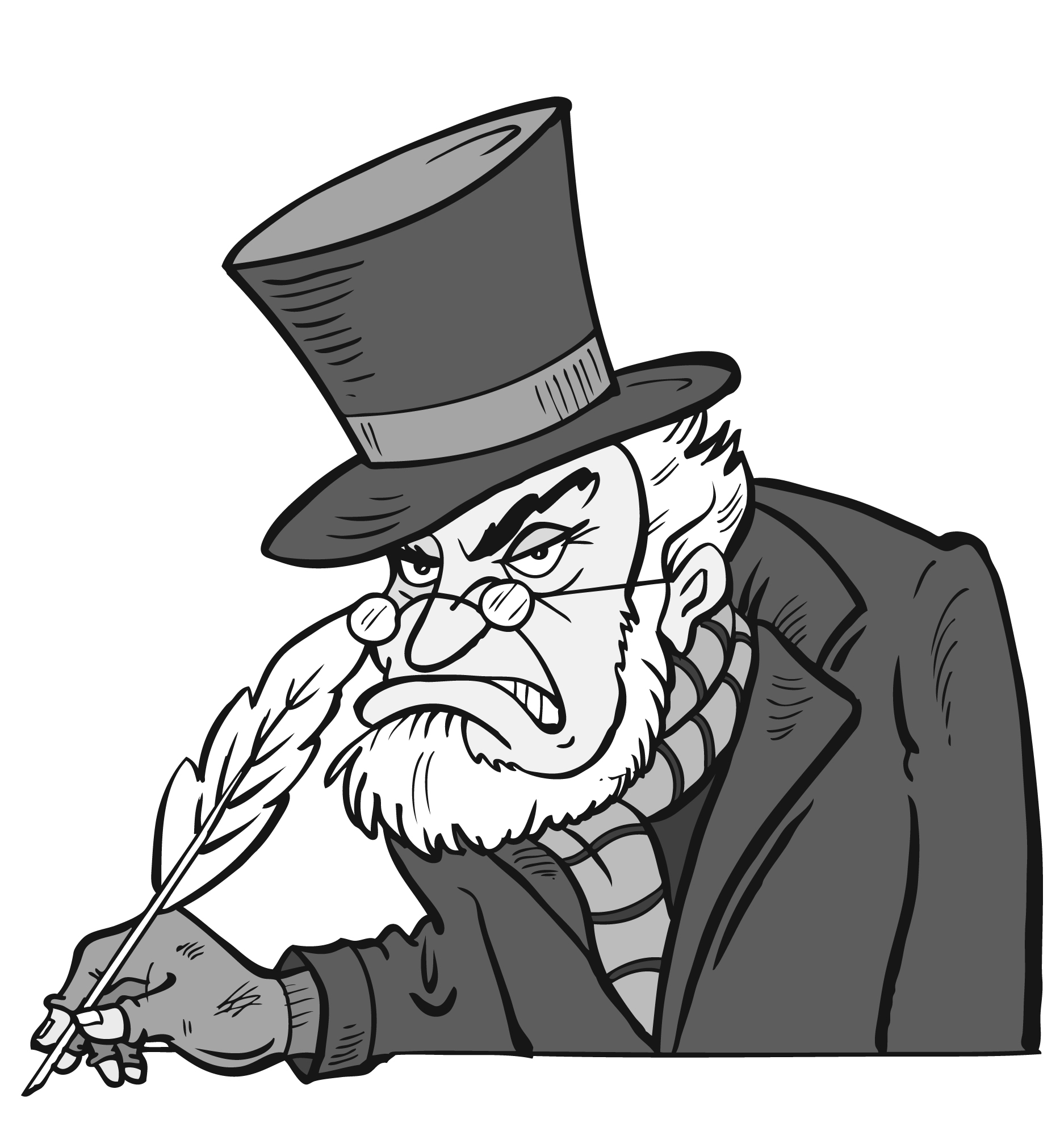
The figure in these two phases haunted the lawyer all night; and if at any time he dozed over, it was but to see it glide more stealthily through sleeping houses, or move the more swiftly and still the more swiftly, even to dizziness, through wider labyrinths of lamplighted city, and at every street-corner crush a child and leave her screaming. And still the figure had no face by which he might know it; even in his dreams, it had no face, or one that baffled him and melted before his eyes; and thus it was that there sprang up and grew apace in the lawyer’s mind a singularly strong, almost an inordinate, curiosity to behold the features of the real Mr. Hyde. If he could but once set eyes on him, he thought the mystery would lighten and perhaps roll altogether away, as was the habit of mysterious things when well examined.
This nightmare visitation of Hyde is described vividly, using an all-knowing third person narrator, who has the ability to ‘see’ into Utterson’s head. We can appreciate why Utterson might dream of Hyde: he feels protective of Dr Jekyll and is concerned by the seeming anomaly of the new will. However certain aspects of the language unsettle us and do not easily lend themselves to understanding. My previous blog about this passage discussed Utterson’ dream in detail, yet was by no means an exhaustive reading. When I taught the passage again this weekend, I noticed still more aspects of the description that seemed strange.
A) Why does the narrator claim that Utterson sees Hyde, ” (it) glide more stealthily through sleeping houses”, when Hyde( in our first glimpse of him) moves violently as he stomps on a child? The verb ‘glide’ endows Hyde with a subtlety and lightness of movement that is in direct contrast to his behaviour. The pronoun, ‘It’ seems designed to dehumanise him too, suggestive of his otherness and difference. He may even appear supernatural in his movements as he is gifted with a movement and speed, that resembles flight. We are not far away here from the world of ghosts and Dickens’ Christmas Carol. Hyde is rendered a shape-shifter still further when, ”or move the more swiftly and still the more swiftly, even to dizziness, through wider labyrinths of lamp lighted city,” which gives Hyde powers that cannot be explained by the limitations of the rational mind. We sense the exuberance and intense power of the athletic Hyde and the night city seems a playground in which Hyde can test his powers. The word labyrinth adds Gothic horror to the nocturnal playground. What can be seen is not to be rationally understood, and the movements of the liberated Hyde are without censor or moral care: ” at every street-corner crush a child
B).”...it had no face or one that baffled him and melted before his eyes;” The inability of Utterson to see Hyde’s face is one of the recurring horrors of the novel. Hyde remains an illegible creature, a man who cannot be known and therefore ‘caught’ by society or even the individual. His facial absence is suggestive of a moral absence at the heart of Victorian society, particularly the world of the Victorian gentleman. Of course, Hyde is really Jekyll, so we may argue that Utterson dare not recognise Hyde because in doing so, he would have to admit his friend’s complicity in Hyde’s evil behaviour. So, Utterson is literally and metaphorically ‘blind’ to Hyde’s doppelganger, Jekyll. I would also say that the seemingly uncensored experience of the dream, still reveals Utterson’s repression in the denial of the ‘face’ of Hyde. Hyde is a Judas figure, bent on the discrediting of Victorian respectability, so his face is censored even when discovered in a dream. Such is the repression of Victorian Society that its gentlemanly representative Utterson, must still shroud himself and the reader, from the secret degradation at the heart of late 19ThC society, with its sexual practices that must not be admitted to consciousness and acknowledgement, for fear that they will destabilise all the hypocritical denials on which the Victorian society depended for its respectability.