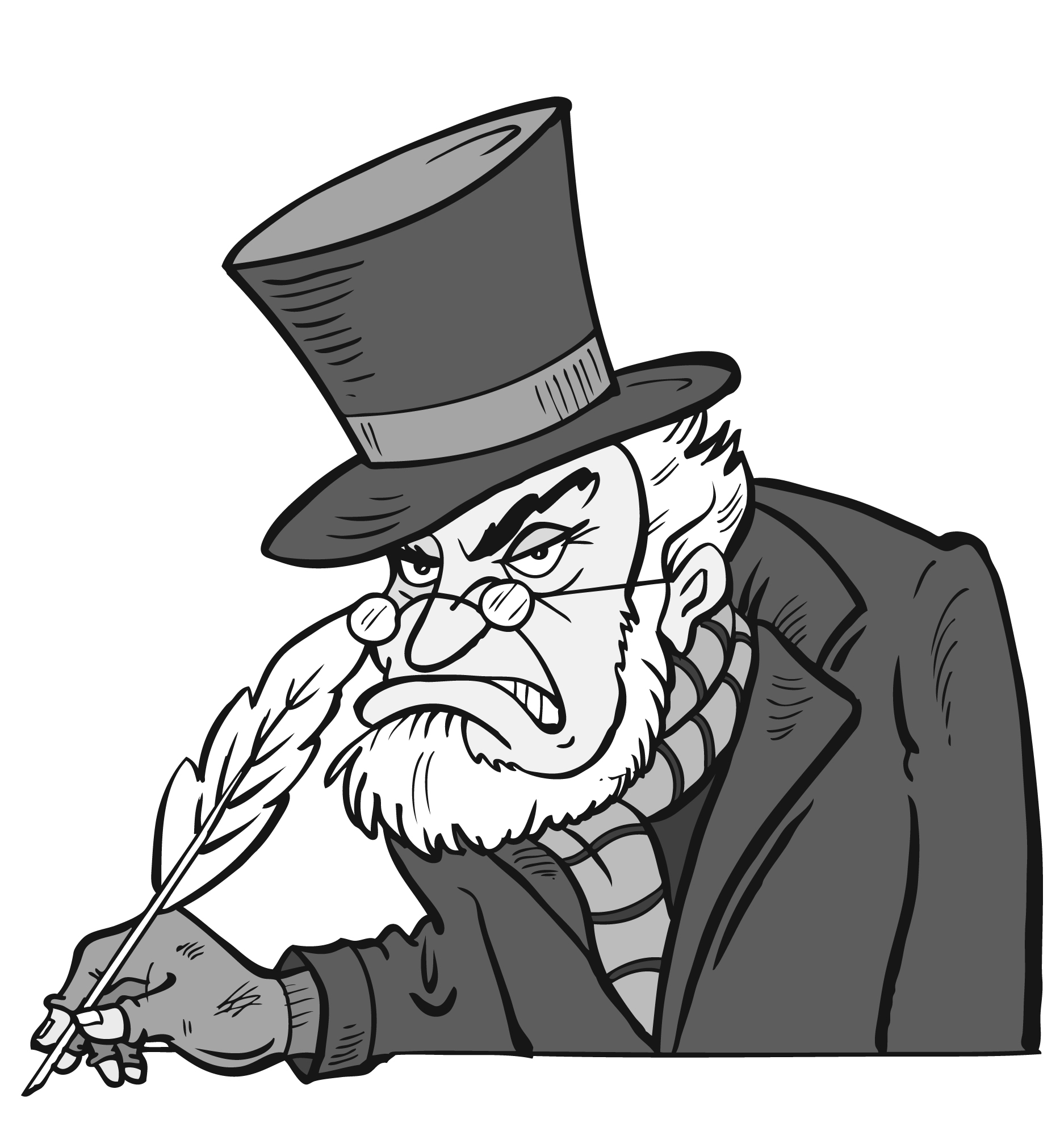
Stave three.
In a nutshell.
The Ghost of Christmas Present reveals the aspects of Christmas that have become very popular in early Victorian England. The Ghost is very jolly and festive and Scrooge is obedient immediately. Scrooge sees into the world of the Cratchits at home and notices Tiny Tim who is ailing. Scrooge takes a keen interest in the child, perhaps identifying with him. Mrs Cratchit is unimpressed by Scrooge. Fred and his family are also seen at home and the females are reluctant to toast Scrooge. ‘Ignorance’ and ‘Want’ are glimpsed at the end of the stave, hidden beneath the disappearing Ghost’s robes.
Summary with Quotations.
Scrooge now expects the inevitable visit of the next ghost who transforms Scrooge’s living area. ‘Hung with living green .’ Light again is strikingly bright. This ghost is a ‘jolly giant ‘and shows Scrooge the opulence of a traditional Christmas with ‘ barrels of oysters, red-hot chestnuts, cherry-cheeked apples…’ Victorian Christmas is being celebrated.
The colours endow the green room with a sense of festivity and a strong affirmation of life.
Interesting that the giant is referred to as an ‘it’. Perhaps the androgyny makes the second ghost universal in their appeal. Like Angels too?
‘Touch my robe!’ This command reveals that Scrooge is now obedient to his supernatural visitors. His acquiescence shows he is transforming, becoming humbler. The imperative ‘touch my robe’ is reminiscent of Christ’s encounter with the suffering woman in the Gospel of St Mark. The giant’s power seems connected to his/her finite lifespan. He exists for just one day. Ephemerality endows him with special gifts.
As soon as Scrooge touches the robe, the room with all its accoutrements of Christmas vanish and they are in a street, in the city which is teeming with good-natured, communal ‘glee’ despite the cold. The Ghost’s torch sprinkles goodwill and takes Scrooge to the house of Bob Cratchit and his family, where despite their evident poverty, they are cheerfully helping each other and sharing good-natured, teasing banter. Mrs Cratchit is revealingly described as being ‘brave in ribbons.’ Tiny Tim is evidently very poorly and the family work very hard to provide the very best Christmas celebration. Thus pathos and tragedy lurk beneath the energy and good humour.
A toast is proposed for everyone and Tiny Tim declares’ God bless us, everyone!’ ( Foreshadowing the end of the story).
Scrooge asks the ghost if Tiny Tim will survive. Such exceptional ‘interest’ on the part of Scrooge prompts The Ghost’s direct reply ‘ I see a vacant seat…in the poor chimney corner.’ When Scrooge is emotionally affected, the ghost repeats Scrooge’s earlier reference to the ‘surplus population.’ Scrooge expresses penitence at the rebuke. His capacity for self-reflection and penitence is increasing.
Bob Cratchit breaks into the scene again with a proposed toast to his employer Scrooge as the ‘founder of the feast.’ The reader recognises the kindness of Cratchit in his forgiving toast. His wife however angrily reminds her family of Scrooge’s character. ‘Odious, stingy…’ Contrast between the unhappy, isolating avarice of Scrooge and the Cratchit’s care for each other. ‘Their clothes were scanty ..but they were happy…’
Ghost transports Scrooge to other Christmas celebrations, where cheerfulness exists despite extreme deprivation in their working conditions. ( The miner and his family. The lighthouse keepers.) Weather and landscape are very forbidding, and not obviously conducive to celebration.
Again the tableaux are interrupted by a change of scene, so Scrooge suddenly hears a ‘ hearty’ laugh and then discovers it’s his nephew who is the epitome of ‘affability.’ The Christmas gathering are discussing Scrooge’s reaction to Fred’s visit and interestingly, Scrooge’s niece and other women are far more condemnatory of Scrooge than his nephew. ‘I am sorry for him.’ Truly accepting. Unconditional affection. Again, contrast to the conditional Scrooge.
Much merriment follows and Scrooge is even the solution to a party game. So much fun is enjoyed at the mention of Scrooge, that his honourable, compassionate nephew proposes a toast to ‘Uncle Scrooge.’. Benevolence exists despite Scrooge’s hostile temperament. Merriment infects even Scrooge who notices the Spirit’s grey hair. Signals development of empathy and compassion. His care for another marks another moment of change.
‘ Are spirits lives so short?’ The irony that the ghosts ephemerality is clearly linked to his healing actions and enthusiastic goodness. But then there is a sudden change of tone and the ‘scowling, wolfish’ figures of Ignorance and Want are discovered in the robes of the Ghost.
Scrooge feels horrified and desperately asks if any ‘refuge’ for the monstrous children. Ironically, the ghost repeats back to Scrooge his earlier, trite question, ‘ Are there no workhouses?’
The bell strikes twelve and then Scrooge discerns the final ghost or ‘solemn Phantom’ coming towards him. Interesting that there is no respite for Scrooge before this encounter. Story segues into the horror of the final Ghost who seems to be Death itself.