

Stave Two.
“A small matter,” said the Ghost, “to make these silly folks so full of gratitude.”
“Small!” echoed Scrooge.
The Spirit signed to him to listen to the two apprentices, who were pouring out their hearts in praise of Fezziwig: and when he had done so, said,
“Why! Is it not! He has spent but a few pounds of your mortal money: three or four perhaps. Is that so much that he deserves this praise?”
“It isn’t that,” said Scrooge, heated by the remark, and speaking unconsciously like his former, not his latter, self. “It isn’t that, Spirit. He has the power to render us happy or unhappy; to make our service light or burdensome; a pleasure or a toil. Say that his power lies in words and looks; in things so slight and insignificant that it is impossible to add and count them up: what then? The happiness he gives, is quite as great as if it cost a fortune.”
He felt the Spirit’s glance, and stopped.
“What is the matter?” asked the Ghost.
“Nothing in particular,” said Scrooge.
“Something, I think?” the Ghost insisted.
“No,” said Scrooge, “No. I should like to be able to say a word or two to my clerk just now! That’s all.”
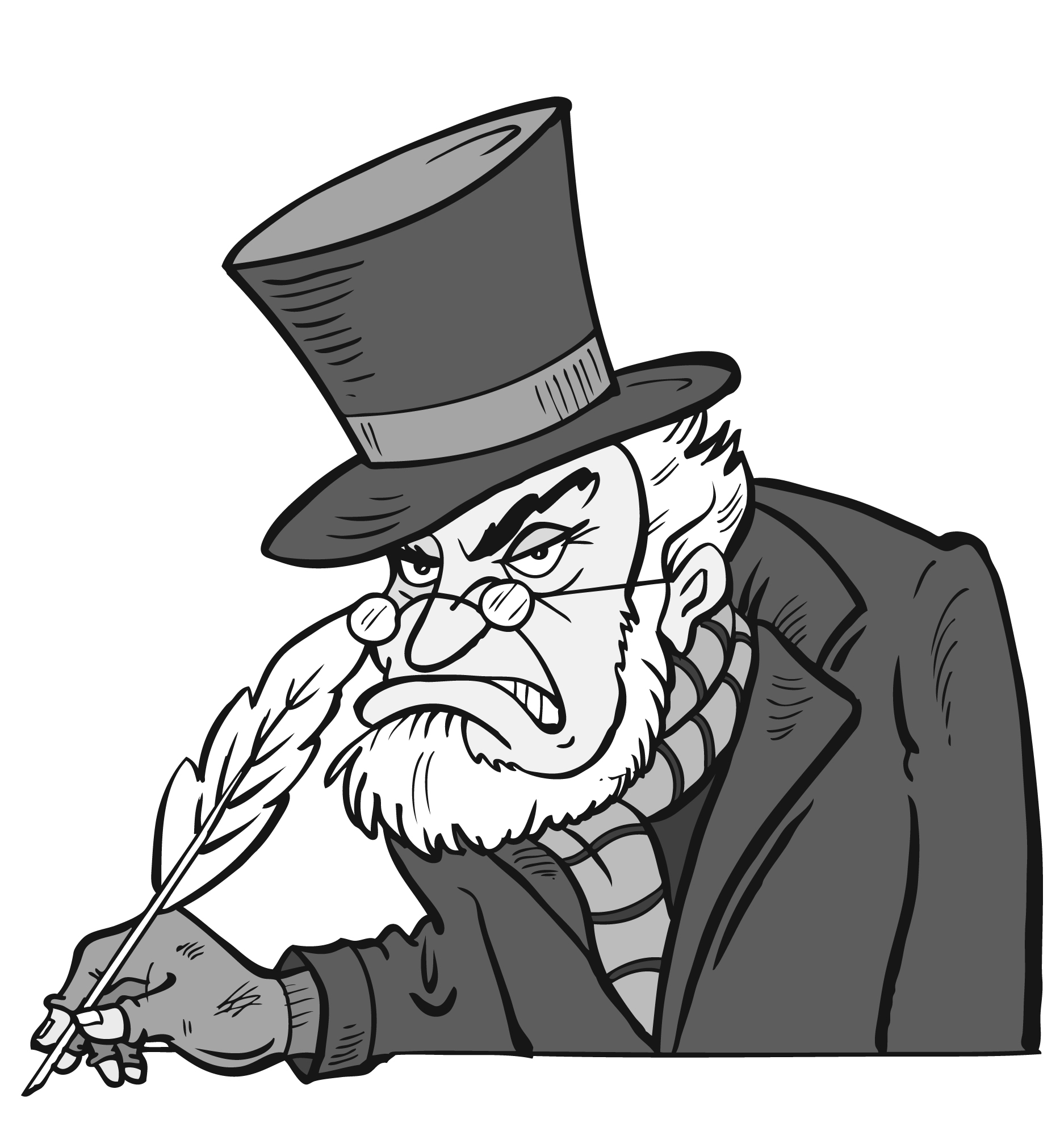
Dickens takes the reader with Scrooge on his evocative, visually affecting journey through different time zones, in order to encourage Scrooge to reflect on his own behaviours and thus transform himself into a compassionate human being who respects the meaning of Christmas.
This journey involves much spectatorship, as Scrooge travels from scene to scene, spectating on what he has forgotten in order to reawaken his lost capacity for sympathy. And the reader watches Scrooge watching and being watched adding to the almost cinematic aspect of the novel’s dynamic movement.
The ghosts exhibit representations of experiences as scenes to Scrooge and these representations are scrutinised in order for their emotional impact to be discussed and even elaborated upon.
Thus we discover that Scrooge has forgotten how to feel and how to live emotionally and with sympathy for others. Scrooge is essentially ‘dead’ to all feelings except cynicism at the beginning of the novel. The telling simile used to describe Scrooge in the first stave: ‘solitary as an oyster’ underlines the isolation of Scrooge socially and also operates as a symbol of his callous defensiveness where any demonstration of benevolence is concerned.
The ghosts prompt Scrooge into self-reflection, often repeating his own derisory pronouncements about the poor back to him. in order to precipitate change through the revelation generated by his acute discomfort and shame. This technique operates as a form of mirroring and could even be said to be another form of spectatorship.
Scrooge witnesses scenes from his life and is questioned about these scenes and their consequences often even deploying his own earlier reflections in order to humiliate Scrooge into a form of moral submission.
In this exchange in Stave two, the Ghost of Christmas Past questions Scrooge about the scene he has just revisited involving his earlier mentor, Fezziwig. The apprenticeship of Scrooge to Fezziwig most likely lasted seven years as was the custom and yet despite the obvious elation of Scrooge when he witnesses Fezziwig’s benevolent gift of a Christmas party, his later miserly life hardly indicates any lasting effects on his spiritual self or behaviour. Why do we wonder has Fezziwig’s benevolent effect has been forgotten, especially when we sense his benevolent behaviour helped to assuage the callousness of both Scrooge’s experience of school and as a bullied and rejected son?
Why too has Scrooge’s passionate reading of Ali Baba which operated as an imaginative sanctuary from the horrors of a harsh and neglectful father, been lost to dismissively unimaginative adult self?
It is no accident that Scrooge’s profession is that of a money lender. He is in the business of making money from the impoverished, who need to borrow money at any cost, in order to meet their bills. We assume that Scrooge charges substantial interest in order to make his business profitable. We might call this exploitation. The fact that Scrooge only employs one assistant, Bob Cratchit, encourages his meanness to be sharply focused on one of the exploited poor. Scrooge has chosen a different profession from the evidently wealthy and well-fed Fezziwig, who is prepared to extend his personal happiness to others through benevolent actions towards his many staff. Fezziwig is part of a community whilst Scrooge is limited when we meet him to Bob Cratchit, because Marley is dead and thus Scrooge’s isolation is deepened.
In the extract above, the Ghost deliberately uses Scrooge’s own views and predilection for quantifying everything, to challenge and then embarrass Scrooge.
We recognise that the Ghost is holding up a mirror to Scrooge in terms of his previous opinions on the poor in order to instigate a moral change in him.
The ruminative declaration, ‘ Small!’ reminds Scrooge of himself, hence the irony of the verb ‘echoed.’ For in the past, Scrooge has trivialised the plight of the poor in the most unkind terms: ‘ are there no prisons?’ Such callousness is also revealing when placed in the context of Dickens’ own childhood where his father’s debts consigned his family to prison and poor Dickens to the spiritually destructive environment of the Blacking Warehouse.
The Ghost astutely makes Scrooge continue to witness the effects of Fezziwig’s benevolence by eavesdropping on the heartfelt praise of this employer by his two apprentices. Again we notice the curious use of mirroring again as Scrooge was one of these apprentices and he is thus spectating on himself and defending his younger self’s spirited gratitude for Fezziwig’s benevolence.
When we listen to Scrooge’s defence as his ‘former self’ we notice the repeated use of personal pronouns like ‘us’ and ‘our’ which implicate Scrooge within the scene still, and make the reader realise how far the present elderly Scrooge has strayed from the passionate, emotionally expressive person he used to be.
The ‘glance’ of the Ghost unsettles Scrooge still further as he clearly ruminates on his experiences revisiting the past. The direct question: ‘What is the matter?’
Operates rather like the role of the enigmatic Inspector in Priestley’s later play.
The verb ‘insisted’ underlines the very active role of the Ghost in encouraging Scrooge to articulate his feelings and thus reflect on his changing attitudes toward his previously entrenched beliefs.
The repetition of ‘no’ by Scrooge ironically forces his ‘former self’ to subdue the rigidity and repression of the oyster’s shell self and to admit that he wanted to say a ‘word or two’ to Bob Cratchit. It seems in keeping with Scrooge’s profession as a money lender that he should quantify or weigh up the number of words and that he should be thrifty too. We may also detect the awkwardness of Scrooge when admitting the beginnings of regret and remorse. He is reconnecting with his buried feeling self and it is somewhat awkward for him!
The apparently casual dismissal of feeling ‘that’s all’ shows Scrooge’s attempt to shrug off this metaphorical chink in his emotional armour as he is palpably embarrassed by this emerging shift in feeling. And this shrug allows the reader to carry on with Scrooge’s journey which needs more of a sustained transformation before the epiphany at the end. So structurally the dismissal is necessary to perpetuate the ensuing dramatic action and seems psychologically convincing too.
