
Macbeth: ACT One Scene Three-Macbeth and Banquo meet the witches: GCSE English Literature Analysis and Questions
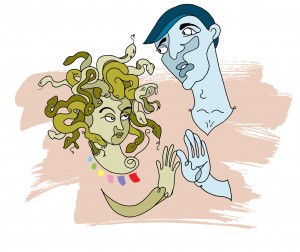
- The witches’ natural habitat seems a place of isolation and ‘thunder.’ Does this combination communicate their otherness and subsequently disruptive, chaotic effects on both Macbeth and Banquo? If this encounter is premeditated and a supernatural ‘ambush’ then how much agency do Macbeth and Banquo have to resist their influence? Why are the witches so gleeful in this scene? ‘A drum, a drum, Macbeth doth come.’
- When the Second Witch announces she has been ‘killing swine,’ how do you think she says this? Think about the tone of her voice and the way it directs the audience’s reaction. Does this statement highlight the witches’ shared pleasure in violence, yet also their innate banality? Remember they are not named, unlike Hecate later on.
- This encounter is prearranged and the audience is in the privileged position of being already familiar with the Witches’ proposed assignation with Macbeth. Why do they not mention Banquo? Is it because his integrity separates his world from their corrupt one?
- The First Witch declares a grudge against the sailor’s wife and her desire to bring deprivation upon the sailor although with limitations too. So she can ‘drain him dry as hay’ yet ‘his bark cannot be lost.’ Why are these limitations necessary? Do they suggest that evil is not all-consuming?
- The ‘pilot’s thumb’ is regarded as a trophy by the First Witch. How does this predilection for violence and disregard for humanity, prepare the audience for Macbeth’s encounter with the witches and his subsequent fall into moral chaos?
- Look how the unholy trinity of witches draw attention to their corruption of the mystical three. ‘The charm’s wound up.’ How effective is this image? What do you think about this? Does this declaration draw attention to their malign contrivance? And if so, does that in any way exonerate Macbeth as he is bewitched? Are we also aware of the significance of timing in this scene and the rest of the play?
- As soon as we hear Macbeth say, ‘So foul and fair a day, I have not seen,’ do we know he is lost to the incipient and contaminating influence of the witches? Have they connected with Macbeth even before they actually meet him? And why the oxymoronic declaration about the ‘day’ by Macbeth? Is he glad the battles are over? We know that there is thunder, so is he a creature of the night? Or just relieved to e heading home to his wife?
- Look how Banquo’s observations of the witches acknowledge their inhumanity; their otherworldly, even supernatural aspect. Is Banquo’s courage striking? He is also a moral foil to Macbeth who is less talkative, yet still as curious, if not fascinated. ‘What are you?’
- Why are the Witches’ salutations to Macbeth designed to unsettle the conquering nobleman? Does their flattery escalate and expose any of Macbeth’s secret desires?
- Banquo’s acute observation of Macbeth establishes the former’s intelligence and the latter’s burgeoning guilt. ‘Good sir, why do you start and seem to fear/Things that do sound so fair? ‘ Presumably, Banquo checks Macbeth’s palpable reaction and thus (ultimately) condemns himself to death as Macbeth will view his friend as an all too real threat. What do you feel about the dynamic between these two friends in this scene? Remember that in death, Banquo’s ghost haunts Macbeth, unlike Duncan.
- When Banquo demands that the witches address him, they comply. Once again, the Witches use oxymoron or paradox to offer their predictions. Are they deliberately planting the seeds of jealousy in Macbeth’s mind so that he will turn against his friend? Is this part of the Witches’ malignity that they wish to destroy all that is good in the world? They know that Banquo will not yield to their evil temptations, so they manipulate his friend to become his rival?
- The Witches vanish before they can be cajoled by Macbeth to answer any questions. Is this a malign tactic designed to destroy what remains of Macbeth’s equilibrium, that was presumably already agitated by the exhalation and horrors of the battle?
- When Angus and Ross salute Macbeth as the Thane of Cawdor, this seems to seal the Witches’ credibility for Macbeth and to inspire the brilliant question of Banquo, ‘What, can the devil speak true?’ And to further destabilise the composure of Macbeth, ‘ why do you dress me in borrow’d robes, ’ anticipating his treachery and even foreshowing Dr Jekyll’s secret murderous self in Mr Hyde.
- Do you think King Duncan is too precipitate in bestowing the title, ‘Thane of Cawdor ‘ on his new favourite immediately after the first Cawdor has proved a traitor? Is Duncan naïve? Possessed of flawed judgement? Eager for loyalty?
- The scene draws to a close with Macbeth speaking in the aside, twice. Does this dramatic device create an uneasy alliance between the audience and the protagonist? If Macbeth refers euphemistically to the projected murder of Duncan as a ‘horrible image’ this reveals what about Macbeth’s conscience at this point of the play?
- The fact that Banquo again notices that his partner is ‘rapt’ again highlights his intimacy with Macbeth and the depth of his intelligence. Hence, Banquo is too close to Macbeth’s inner life to be tolerated as a friend and he cannot be corrupted, so he must die.
- At the end of the scene, Macbeth reassures his fellow noblemen that he has just been distracted by ‘things forgotten’. Does this show his emerging connivance and that the appearance of the outer world in the play is very much at odds with the inner world? Indeed appearance and reality prove completely at odds in the play as the moral universe is devoured by greed.
